- Becoming
- Posts
- 6 hidden habits of elite performers, WTF- failures are superpower? and the relationship rule most people ignore until it's too late
6 hidden habits of elite performers, WTF- failures are superpower? and the relationship rule most people ignore until it's too late

Zeel Patel
May 27, 2025

Hey there,
I'm off on vacation this week enjoying the sun in Kelowna, British Columbia! Before heading out, I struggled with whether to write this newsletter or not. I value consistency but equally value my time off. I decided to prepare this edition a few days early to honor both commitments.
I hope you enjoy this edition. I've packed this edition with powerful lessons on high performance, resilience, and relationships that have been game-changers in my own life.
Let's dive in and explore some ideas that might just transform how you approach your goals and setbacks.
Today at a Glance
Read Time: 4 minutes
I’ve been following Brendon Buchard's work since the start of my journey in the professional development industry - I started learning about performance and how to effectively manage it by reading his work and taking his courses. I fell in love with his work because just like me Brendon is also obsessed with understanding what separates extraordinary achievers from everyone else.

His findings revealed six critical habits that high performers consistently demonstrate regardless of age, career, strengths, or personality:
1. Clarity: High performers develop and maintain extraordinary clarity about who they are, what they value, and where they want to go.
2. Energy: They actively manage their mental, emotional, and physical energy to sustain peak performance.
3. Necessity: They create a psychological drive that makes excellence inevitable rather than optional.
4. Productivity: They focus on prolific quality output in the areas that matter most.
5. Influence: They intentionally increase their impact on others and the world around them.
6. Courage: They consistently act despite fear, taking bold action when others hesitate.
What makes these habits so powerful is their consistency across contexts. High performers apply these principles from goal to goal, project to project, team to team, and relationship to relationship.
These habits are interconnected, meaning that progress in one area can positively influence the others. For example:
Clarity Enhances Energy: When you have a clear understanding of your goals and values, you can channel your energy more effectively, reducing wasted effort and increasing motivation.
Energy Fuels Productivity: By maintaining high energy levels, you're better equipped to focus and produce high-quality work consistently.
Necessity Drives Courage: A strong sense of necessity can compel you to take courageous actions, pushing past fears to achieve your objectives.
In essence, cultivating even one of these habits can create positive momentum, indirectly boosting the others and leading to overall enhanced performance.
#2. WTF- Failures are Superpower?
You know what’s wild?
The people we admire most—like Steve Jobs, Oprah, Einstein, Michael Jordan?
They’ve actually failed a lot.
Like, more than most people even try.
But they didn’t let it stop them. They just handled failure differently.
Most of us hit a setback and think, “Ugh, maybe I’m not cut out for this.”
We beat ourselves up, avoid risks, and start playing it small.
But here's the truth:
the failure itself isn't the issue—it's what you tell yourself about it.
If you decide failure means “I’m not good enough”, then yeah:
You’ll stop trying new things to avoid the lesson because it feels uncomfortable
You’ll play it safe by letting a past mistake dictate what they believe is possible in the future
You’ll shrink your goals by saying “I’m a failure” instead of “That attempt didn’t work
But what if failure is actually a gift? Like…data. Feedback. A nudge in a better direction?

So how do you bounce back? Here’s the Resilience Roadmap:
1. Separate your identity from the outcome
Failure doesn’t mean you are a failure. It just means that version of your approach didn’t work.
🧠 Michael Jordan was cut from his high school basketball team. Instead of thinking, “Maybe I’m not meant for this,” he locked himself in his room, worked harder, and became one of the greatest of all time.
2. Find the specific lesson
Ask yourself: “What exactly can I learn from this?”
Don’t generalize it as proof you’re not good enough. Look for the takeaway.
🎨 Walt Disney was fired for “lacking imagination.” Instead of quitting, he realized he needed to create his own space to dream—and built an empire from it.
3. Take one small action based on what you learned
The fastest way to rebuild momentum is to make a move—any move—based on the lesson.
💻 Steve Jobs was fired from Apple—the company he founded. Brutal, right? But instead of giving up, he started new projects (like Pixar and NeXT), which made him even better. And eventually, he returned to Apple and changed the world again.
Question for Reflection: What recent "failure" might actually contain your most valuable lesson?
Bottom Line:
If you’ve never failed, you’ve never tried anything new.
Failure isn’t a flaw—it’s feedback.
✅ Reframe it
✅ Learn from it
✅ Use it to rise
#3. Relationship rule most people ignore (until it's too late)
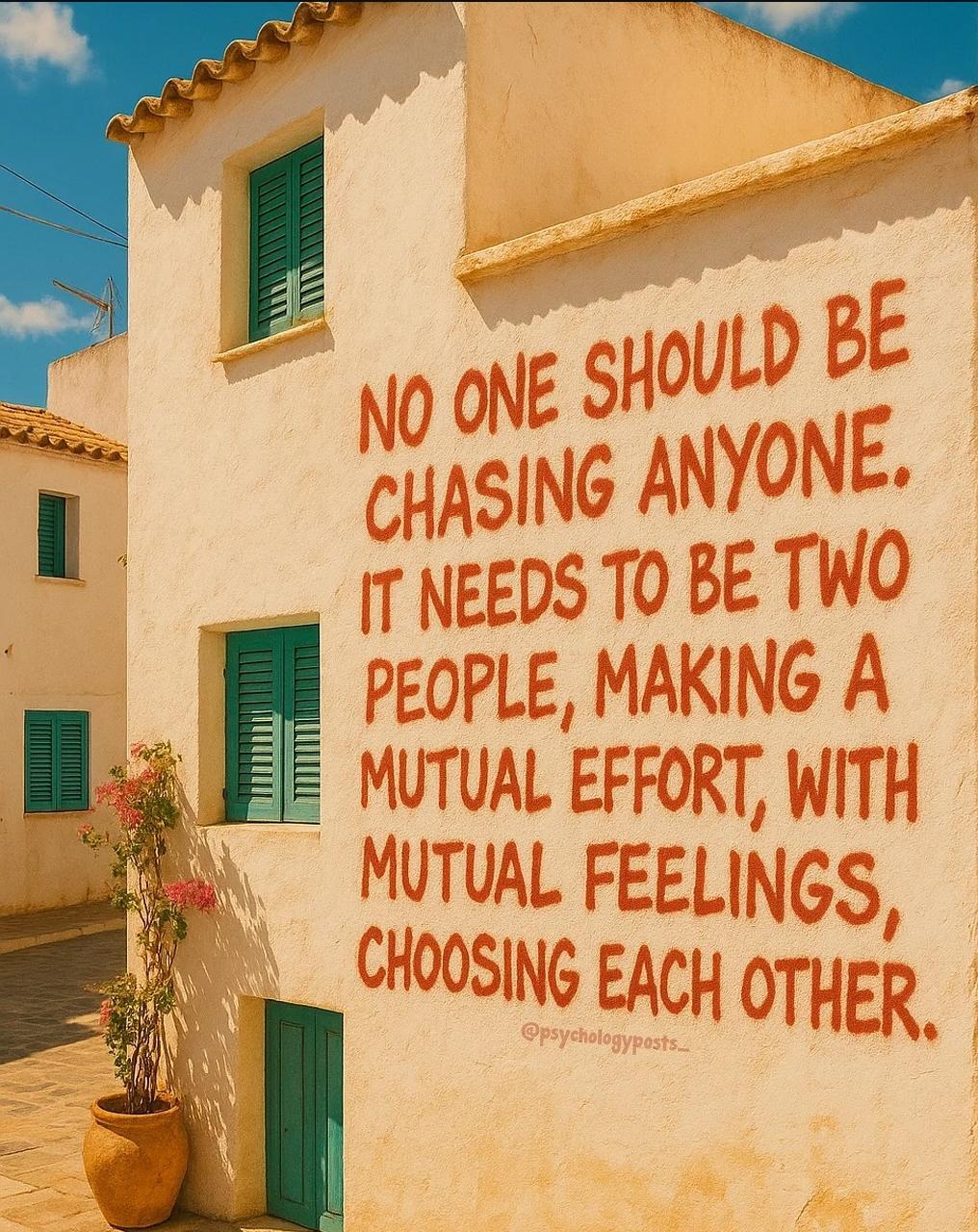
How often we find ourselves in one-sided relationships—whether it’s romantic, work-related, or even friendships—where we’re putting in way more than we’re getting back.
Real connection isn’t about chasing or convincing someone to stay.
It’s about two people choosing each other—openly, willingly, and consistently.
When both sides show up with equal effort, care, and intention... that’s when something truly meaningful starts to grow.
Honestly, the most solid and beautiful relationships I’ve seen (and been lucky enough to experience) all share this one thing: mutual choice.
Not just in big gestures, but in the everyday actions. The little ways we say, “I see you. I choose you.”
So if you ever catch yourself constantly chasing someone who’s not meeting you halfway, pause and ask yourself:"Is this the dynamic I truly want?"
😂 Boundaries

While this meme makes me laugh, it highlights an important truth: many of us struggle with setting and maintaining boundaries. We either make them too rigid or too permeable.
Healthy boundaries aren't about building walls—they're about creating clear guidelines that protect your energy while allowing meaningful connections.
They're flexible enough to adapt but firm enough to preserve your wellbeing.
Summary of Week's Mindset & Performance Boosters:
• Identify which of the six habits needs most attention in your life right now. Focus on improving just that one habit for the next 30 days.
• The next time you face a setback, practice saying "This approach didn't work" instead of "I failed." Then identify one specific lesson and one immediate action.
• Evaluate your key relationships through the lens of mutual effort. Are you both actively choosing each other? What small action could improve the balance?
• Identify one area where your boundaries need strengthening. Practice articulating that boundary clearly to yourself before expressing it to others.
While I soak in the sunshine, read some good books, and reflect on life, I'm already gathering insights for our next conversation.
Hit reply with your thoughts—your input might inspire a deeper exploration in a future newsletter. If there's a specific challenge you'd like me to address, let me know. I read every message!
Talk soon,
Zeel